Dubai Property Insights
Will Dubai Property Crash in 2027? What the Supply Data Really Says

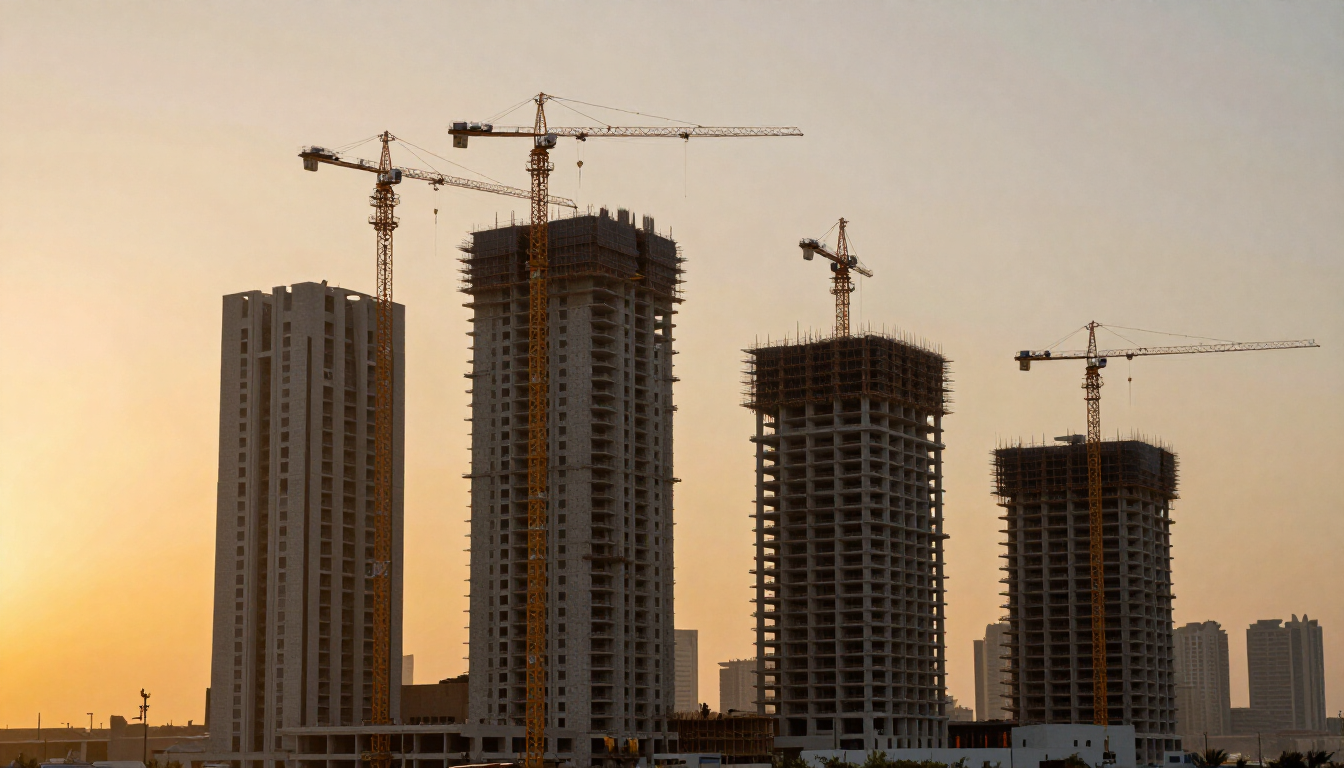
If you're thinking of buying property in Dubai, or you already own one, these numbers matter. About 162,500 homes are scheduled for completion in 2027 and 128,200 in 2028, according to Cavendish Maxwell. Compare that with 2026, when Dubai is expected to hand over around 55,600 homes, already the most since 2008.
On top of that, prices have fallen about 10% since February 2026. So the question everyone is asking is simple: is Dubai property going to crash in 2027?
I'm Tushar Udassi, founder of Booming Realm. In this article I look at the data, not the emotions: supply, population, delays and history. At the end I'll give you my verdict on which properties are safest and where the risks are.
Watch the video version
Scheduled is not the same as delivered
The 162,500 figure is what developers have scheduled. In Dubai, what actually gets handed over is usually far lower. Cushman & Wakefield Core projects just over 60,000 homes delivered in 2027, well under half the scheduled number.
This isn't a guess. It's how Dubai has always worked: handover dates slip and projects get delayed.
| Year | Forecast or scheduled | Actually delivered |
|---|---|---|
| 2025 | 90,000 forecast by Fitch | About 40,400 |
| H2 2026 | 47,000 scheduled | 14,000 to 23,500 expected |
| 2027 | 162,500 scheduled | Just over 60,000 projected |
Still, 60,000 homes in one year would be a record for Dubai. So the risk is real, just not as big as the headlines suggest.
What kind of supply is coming?
The more important question is what type of homes are being built. The wave is mostly apartments.
- In 2025, about 32,500 of the 40,400 homes delivered were apartments, and only 7,900 were villas and townhouses (Cavendish Maxwell).
- More than 82% of the homes due in the second half of 2026 are apartments.
- The supply is concentrated in a few areas. JVC, Business Bay, Dubai South and a handful of other communities account for a large share of upcoming handovers.
So when people talk about oversupply, they mostly mean too many apartments in specific areas, not the whole market.
The correction has already started
Many people are waiting for 2027. But the correction didn't wait.
After the US and Israel struck Iran on 28 February 2026 and Iran retaliated against Gulf countries, Dubai's population fell by about 61,000 at the height of the conflict, and sales dropped sharply.
Here's where prices stood in August 2026, according to the ValuStrat Price Index:
| Measure | Change |
|---|---|
| All homes, since February 2026 | Down 10.2% |
| All homes, year-on-year | Down 3.1% |
| Apartments, year-on-year | Down 5.3% |
| Villas, year-on-year | Down 1.7% |
| All homes, month-on-month | Down only 0.2% |
Two things stand out. Villas are holding up far better than apartments, and 73% of villa communities were stable. And the monthly fall has slowed to almost nothing. The decline is slowing, and the market is trying to find its floor.
Is this 2014 all over again?
Remember 2014? The Dubai market peaked, and then several things hit at once:
- Oil crashed, from above $100 a barrel in mid-2014 to below $30 by early 2016.
- The dollar got very strong. Because the dirham is pegged to it, Dubai property suddenly became expensive for buyers paying in pounds, euros, rupees and roubles.
- Costs went up. The UAE introduced 5% VAT in 2018, just as projects launched in the boom were being handed over.
Prices fell for about five years, and COVID made it worse in 2020. So yes: in Dubai, a supply wave plus weak demand can cause a long downturn. It has happened before.
What's different this time: the people, and their money
Dubai's population grew by about 332,000 in 2025, a 7.5% rise to 4.58 million. Even with the war, it reached 4.8 million by late September 2026, with nearly 227,000 new residents this year. Meanwhile, only about 40,400 homes were delivered in 2025. Demand ran ahead of supply, which is why prices and rents rose so fast.
But counting people isn't enough. Between 2015 and 2019 the population also grew, yet prices fell, because most new arrivals were workers on modest salaries living in shared housing. Since COVID, the newcomers have been entrepreneurs, Golden Visa holders, wealthy families and remote workers who can afford to buy. That's why prime villa areas like Palm Jumeirah and Emirates Hills have risen so strongly since 2021.
The real question isn't whether people are coming. It's what they can afford and what kind of home they want. People don't absorb supply; people's money does.
The positive signals
Developers have hit the brakes. In H1 2025, 102,000 units were launched across 410 projects. In H1 2026, only 28,000 units across 124 projects, about 73% fewer. Cushman & Wakefield puts the fall at about 58% for apartment launches and 78% for villa launches. That means the pipeline for 2029 and 2030 is already thinning out. The bulge is 2027 and 2028; after that, supply should head back towards normal.
Construction is slower than the plans. About 525,000 homes are planned in Dubai by 2030, but only around 186,000, roughly 35%, are more than 20% built. A project that isn't 20% built today won't be handed over in 2027.
We've seen this before: Fitch expected about 90,000 handovers in 2025, and the real number was around 40,400. Post-war supply chain pressure and contractor capacity could stretch timelines further.
So the 2027 and 2028 supply won't hit the market all at once. It will spread into 2029, 2030 and beyond. For investors, that means two things: less pressure on the market overall, but a real risk of delay if you bought off-plan from a weak developer.
The risks are real too
I won't only tell you the good news.
- The correction Fitch warned about is here. In May 2025, Fitch forecast a 10% to 15% price correction from the second half of 2025 through 2026. We've already seen about 10%.
- 60,000 homes is still a record. Even if only that many arrive in 2027, apartments will face pressure on rents.
- Much of the pipeline is already sold to investors. At handover, many of them will try to rent out or resell at the same time.
Where will the pressure be highest? In generic apartments in oversupplied areas, where hundreds of near-identical units in the same building are competing for the same tenants and buyers.
My verdict
I don't see a 2008-style crash. I see a selective market, where not every property will perform well. Before you buy, check three things:
- Asset type. Villa and townhouse supply is very low, and even in this correction they've fallen far less than apartments.
- Developer. Strong, well-funded and government-backed developers are more reliable on delivery. A weak developer means a real risk of delay.
- Location. Where thousands of similar apartments are handed over at once, both rents and resale prices will be under pressure.
And if you're a buyer, this phase can work in your favour. For the first time in years, there's room to negotiate.
Dubai property crash 2027: FAQ
Will Dubai property prices crash in 2027? The data doesn't point to a 2008-style crash. It points to a selective market: generic apartments in oversupplied areas face the most pressure, while villas, townhouses and well-located homes from strong developers are holding up better.
How many homes will be delivered in Dubai in 2027? About 162,500 homes are scheduled for 2027, but Cushman & Wakefield Core projects just over 60,000 will actually be delivered, because handovers usually slip.
Have Dubai property prices already fallen? Yes. The ValuStrat Price Index was down 10.2% from February 2026 by August 2026, with apartments falling more than villas. The monthly decline had slowed to 0.2%.
Which Dubai areas have the most new supply? JVC, Business Bay and Dubai South are among the areas with the largest share of upcoming handovers, mostly apartments.
Is now a good time to buy property in Dubai? For buyers, the correction has opened room to negotiate. Focus on asset type, developer strength and location, and avoid areas where thousands of similar apartments are being handed over at once.
Get my area-by-area supply report
I've put together a short report showing how much supply each Dubai area is getting over the next few years. Message me on WhatsApp at +971 50 314 9313 with the word "supply" and I'll send it to you. If you'd like to talk through a specific property or budget, I'm happy to do that too, with no pressure and no obligation.
Look at the data, not the emotions.
About the author: Tushar Udassi is the founder of Booming Realm, a Dubai-registered real estate company. He helps investors from India, the UK, Canada and Australia buy off-plan and ready property in Dubai, with Golden Visa support. Watch more of his market breakdowns on the Booming Realm YouTube channel.
Sources
- Cavendish Maxwell: 2027 and 2028 scheduled supply, H1 2026 launches (via Arabian Business, July 2026)
- Cavendish Maxwell: Dubai Residential Market Performance FY 2025
- Cushman & Wakefield Core: 2026 and 2027 deliveries, launches, pipeline (via Khaleej Times, August 2026)
- ValuStrat Price Index, August 2026
- Fitch Ratings forecast (via The National, May 2025)
- WAM: Dubai population 4.58 million at end of 2025
- Gulf News: Dubai population up 226,885 in 2026
- The National: population fell by 61,000 during the Iran war
This article is general information, not financial, legal or investment advice. Property values and rents can go down as well as up.